

API Pump vs Non-API Pump: Which One Should You Choose?
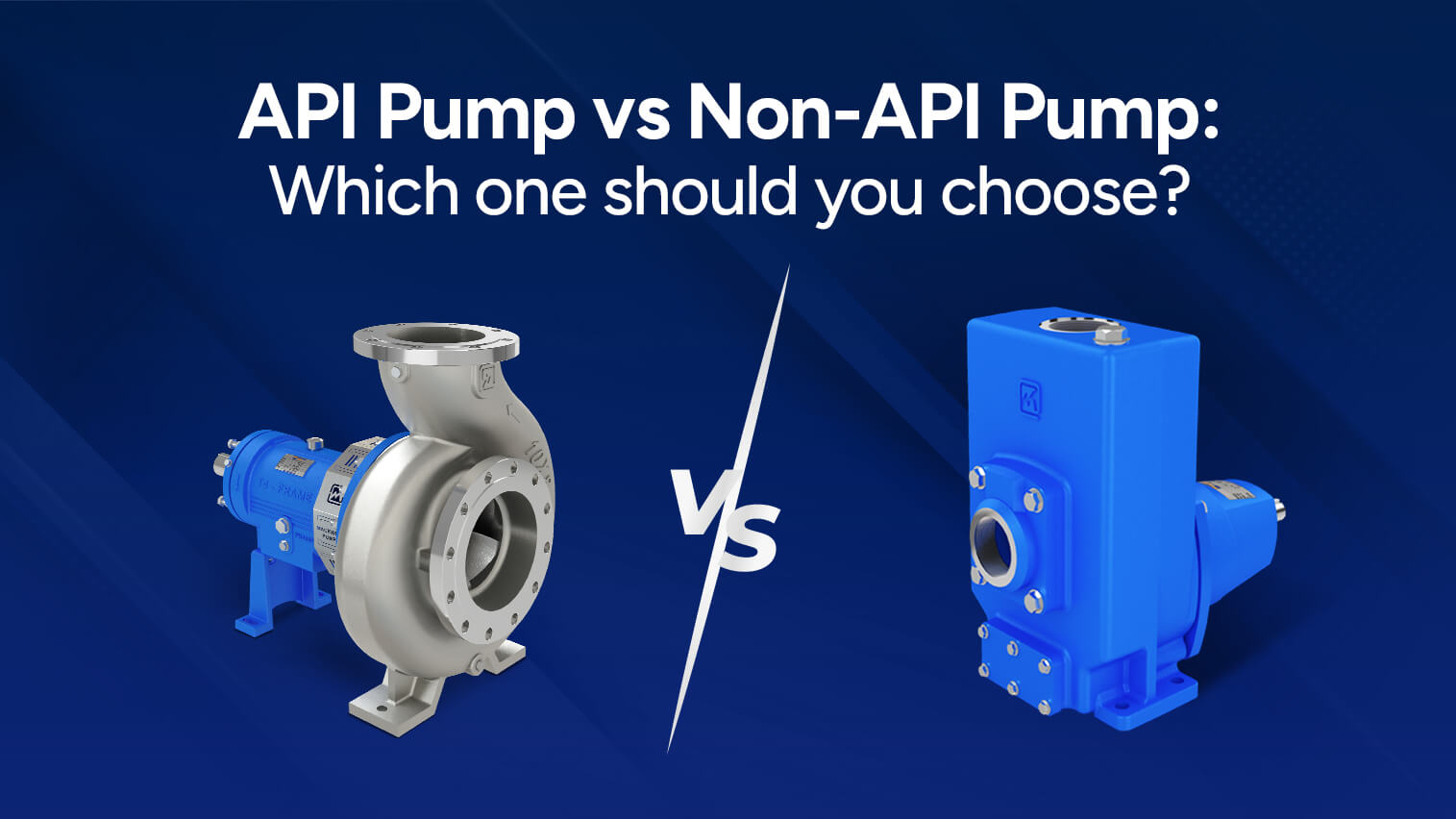
Industrial systems run on precision. So if liquids are being transported via pipelines, the pump responsible for that push has to be trustworthy. Factors like capacity and pressure are just not enough when it comes to selecting a centrifugal pump.
Standards, materials, and conditions of operations are equally important. This is where the debate of API Pump vs Non-API Pump becomes important.
At Mackwell Pumps, we design solutions for both types of applications through our FLOWELL and MACKPRO centrifugal pump ranges.
Why pump standards matter in industrial applications
Pumps often work in environments where safety and reliability are critical. Examples include:
- chemical processing plants
- petrochemical facilities
- oil refineries
- manufacturing systems
In the above industries, equipment failure can lead to loss of production or even safety hazards.
According to the U.S. Department of Energy, pumps account for nearly 25 percent of electricity used in industrial motor systems.
Understanding API and non API pump standards
Determining the basic categorisation of a pump will be an advantage before buying one.
API Pumps
API pumps follow strict standards created by the American Petroleum Institute. These standards are mostly implemented in the oil and gas sector. They are designed to withstand:
- very high pressure
- extremely high temperature
- dangerous fluids
- non-stop work
Non API Pumps
Non API pumps are compliant with other industrial standards such as ISO or ANSI. They are most commonly found in the general industrial sector where the conditions are not as severe. Typical applications include:
- water treatment
- chemical processing
- manufacturing plants
- utility services
Key differences between API and Non API pumps
The main comparison points between API Pump and Non-API Pump are design standards and operating environments. See more distinctions below.
1) Industry usage
API pumps are predominantly deployed in:
- oil refineries
- petrochemical plants
- offshore operations
Non API pumps are often utilised for:
- chemical industries
- water circulation systems
- industrial utilities
2) Design standards
API pumps are made in compliance with the appropriate API specifications. Non API pumps may adhere to standards such as:
- ISO 2858
- EN 22858
- ANSI B73.1
While these standards do provide sufficient reliability, such products are normally intended for a wider range of industrial applications.
3) Operating conditions
API pumps are capable of functioning under the most adverse conditions. They are suitable for:
- high pressure
- corrosive fluids
- dangerous chemicals
Non API pumps are more appropriate for:
- medium pressure systems
- clean or slightly contaminated liquids
- regular industrial operations
4) Cost and complexity
Due to higher engineering requirements, API pumps generally cost more to manufacture. On the other hand, non API pumps are more cheap and flexible for typical industrial systems.
FLOWELL centrifugal pump for general industrial applications
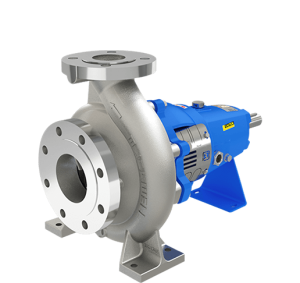
Our FLOWELL centrifugal pump series at Mackwell Pumps is a very effective non-API option. These pumps are built in compliance with ISO 2858 and EN 22858 standards. They work very well for:
- low viscosity liquids
- clean fluids
- slightly contaminated liquids
Main performance features include:
- flow rate up to 1500 m³ per hour
- head up to 160 meters
- pressure up to 16 bar
- temperature range from minus 50°C to plus 200°C
- speed up to 3600 rpm
FLOWELL pumps are extensively used in:
- general industries
- chemical processing systems
- refinery support operations
MACKPRO centrifugal pump for demanding environments
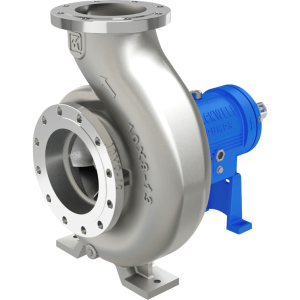
For strongly chemical resistant and highly durable performance demanding industries, the MACKPRO centrifugal pump is the right choice. This pump complies with ANSI and ASME B73.1 standards. It is engineered for harsh fluid handling conditions. Some important specifications are:
- capacity up to 1590 m³ per hour
- head up to 223 meters
- temperature up to 260°C
- speed up to 3600 rpm
The open impeller design also increases hydraulic efficiency.
Final thoughts
Pump evaluation goes beyond just the flow or pressure. It is about finding a perfect match between the machinery and your operational conditions.
API pumps and non-API pumps, however, differ primarily in their design standards and the level of industry requirements they meet.
Through our FLOWELL and MACKPRO centrifugal pump series, Mackwell Pumps assists industries in choosing the most suitable solutions. Each line of product can deliver high performance, durability, and engineering accuracy to industrial systems nowadays.
FAQs
- What is the fundamental difference between API Pump and Non-API Pump?
API pumps are made according to very strict standards of the petroleum industry, while non API pumps are made according to ISO or ANSI standards for general industries.
- Where are API pumps usually used?
API pumps are primarily used in oil refineries, petrochemical plants, and hazardous fluid-handling systems.
- Are non API pumps safe to use in industrial environments?
Indeed. Apart from water systems, chemical, and manufacturing industries, non-API pumps are also popular in other sectors.
Insights about
your industry

Industrial Pumps Used in Starch Manufacturing: A Complete Guide