

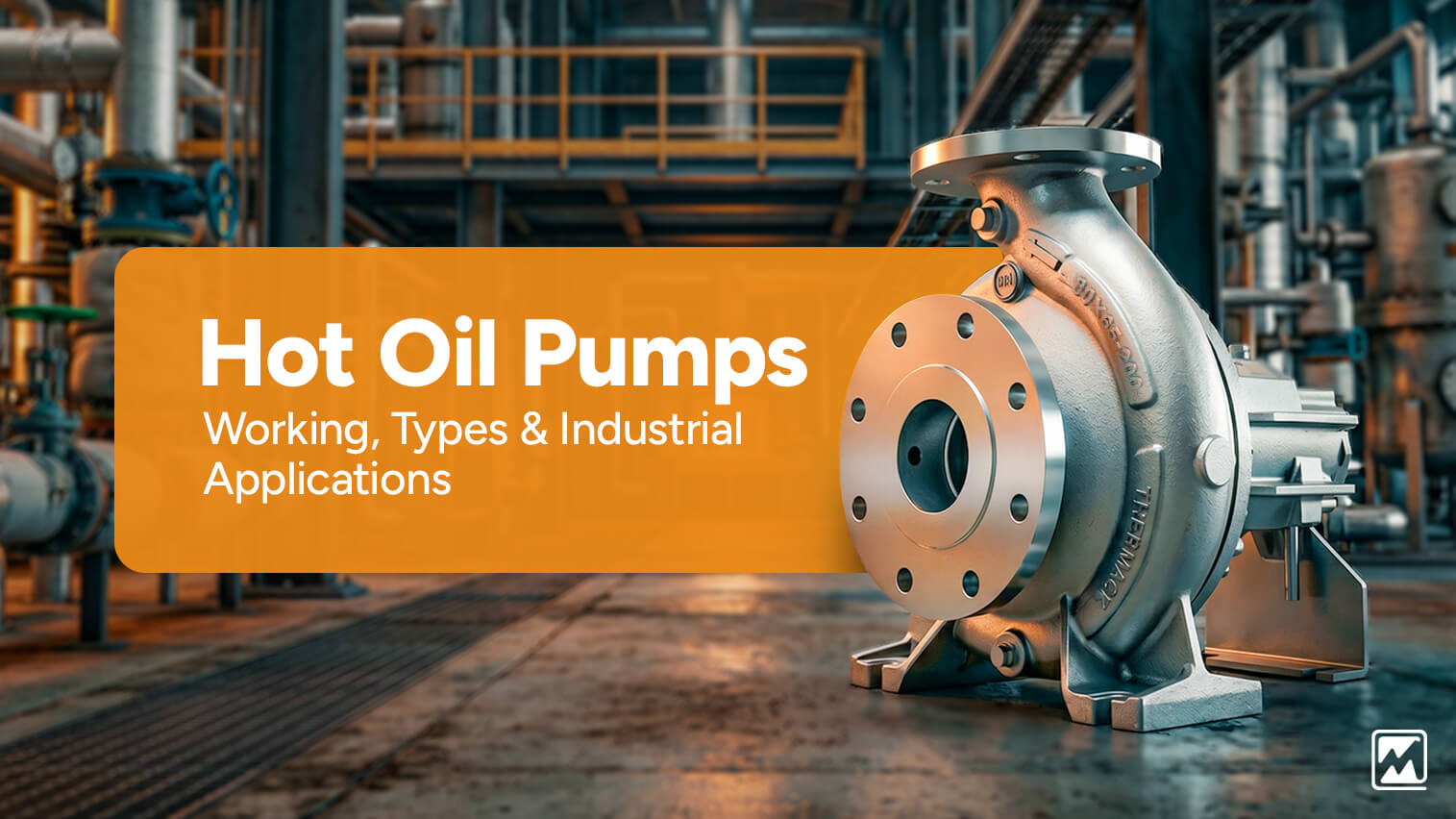
Hot Oil Pumps: Working, Types & Industrial Applications
Ever noticed how some industries deal with extreme heat like it’s nothing? That’s not luck. That’s engineering. Behind many heating systems, a silent performer is doing the real work: hot oil pumps.
And if you’re exploring Hot Oil Pumps Manufacturers in India, you’re probably already dealing with high temperatures where regular pumps just won’t survive. Let’s break this down in a way that actually makes sense.
What Are Hot Oil Pumps (And Why Should You Care)?
Think of them as the backbone of heat transfer systems. Hot oil pumps are specially designed to move thermal oil or hot water at very high temperatures, sometimes going beyond 300°C. And no, your regular pump won’t handle that. What you need is something engineered for:
- Highest temperatures
- Running 24/7
- Uninterrupted output
That’s where systems like our THERMACK™ pump come in. We’ve designed it to run smoothly even at 350°C, without needing external cooling. That alone solves a huge headache for industries.
How Do Hot Oil Pumps Actually Work?
Let’s keep it simple. You heat oil in a system. That oil needs to circulate to transfer heat where it’s needed. The pump pushes this hot oil through pipelines, heaters, and equipment-again and again.
But here’s the tricky part: At high temperatures, oil becomes thinner, seals get stressed, and heat can damage internal parts. So a hot oil pump is built differently.
Key working principles:
- It handles low viscosity fluids at high heat
- It reduces heat transfer to sensitive parts like bearings
- It avoids vapour formation inside the pump
- It maintains steady pressure even in extreme conditions
Our THERMACK pump uses internal venting technology. This allows heat to move away from the casing to the bearings naturally—no extra cooling needed. Less complexity. More reliability.
Types of Hot Oil Pumps You’ll Come Across
Not all setups are the same. Depending on your industry and process, different pump types are used.
1. Centrifugal Hot Oil Pumps
Most popular type.
- Impellers that spin
- Perfect for steady flow setups
- Great for heat transfer circuits
THERMACK is a centrifugal model but with greater thermal performance.
2. Positive Displacement Pumps
These are what you go for if you require accurate dosing.
- Transfers set volume per stroke
- Can handle viscous liquids
- Not always preferable for use with very high temperatures
3. Vertical Hot Oil Pumps
These are used where space is tight.
- Installed vertically
- Common in compact systems
- Easier maintenance access
4. Inline Hot Oil Pumps
Designed for pipeline integration.
- Saves installation space
- Used in smaller industrial setups
If you’re confused about which one fits your needs, most Hot Oil Pumps Suppliers in India will guide you based on your system design.
Why THERMACK™ Stands Out
Let’s talk about something practical. You don’t just need a pump, you need one that doesn’t fail mid-operation. Here’s what we’ve built into THERMACK:
- Handles -50°C to +350°C
- Flow rate up to 754 m³/h
- Head up to 102 meters
- No external cooling required
- Strong shaft design to limit heat transfer
- Dynamically balanced impeller for smooth operation
And the small details matter.
- Flanges follow ISO 7005 / ANSI standards.
- Internal venting improves lifespan.
- Designed for both mineral and synthetic oils
If you’ve worked with overheating bearings or seal failures before, you’ll know how big this is.
Where Are Hot Oil Pumps Used?
This is where things get interesting. These pumps are everywhere; you just don’t notice them.
Common industrial applications:
- Heat transfer systems
- Chemical processing plants
- Textile industries
- Food processing units
- Oil & gas heating systems
- Bitumen and asphalt plants
Basically, anywhere controlled heating is needed. And not just heating, consistent heating. That’s where Hot Oil Circulation Pumps play a major role.
Real-World Example (So It Clicks Better)
Imagine a chemical plant. You need to maintain a constant temperature for reactions. If the oil flow drops even slightly, the process gets affected.
- Output quality drops
- Energy usage increases
- Equipment stress rises
This is why industries rely on Hot Oil Transfer Pumps that can run non-stop without fluctuation. Consistency = profit.
Why Choosing the Right Pump Matters
Here’s something most people overlook. A wrong pump doesn’t fail immediately; it fails slowly.
- Heat damage builds up.
- Efficiency drops
- Maintenance costs rise
According to the U.S. Department of Energy, pumping systems account for nearly 20% of industrial electricity use. So even small inefficiencies can cost a lot over time. That’s why working with trusted Hot Oil Pumps Manufacturers in India makes a difference.
How to Choose the Right Hot Oil Pump
Let’s keep this practical. When you’re selecting a pump, check:
- Operating temperature range
- Flow rate requirement
- Pressure (head) needed
- Type of thermal fluid
- Maintenance access
- Installation space
Also, don’t ignore support. Reliable Hot Oil Pumps Suppliers in India will help you match the pump with your system instead of just selling a product.
Why Industries Are Moving Toward Better Designs
There’s a shift happening. Older systems needed:
- External cooling
- Frequent maintenance
- High downtime
Modern systems like THERMACK focus on:
- Simplicity
- Natural heat management
- Long-term durability
Less downtime = more production.
Final Thoughts
Hot oil pumps aren’t just equipment; they’re part of your process stability. And once you understand how they work, choosing the right one becomes much easier.
Whether you’re setting up a new plant or upgrading an old system, investing in the right Hot Oil Circulation Pumps or Hot Oil Transfer Pumps can save you from long-term headaches. And honestly, that’s what most industries are aiming for: less trouble, more output.
FAQs
1. What temperature can hot oil pumps handle?
Quality pumps like THERMACK often make units capable of operating at temperatures up to 350°C.
2. Do hot oil pumps need external cooling?
Not always. Advanced designs use internal venting to naturally manage heat.
3. Where are hot oil pumps commonly used?
They are used in chemical plants, food processing, textiles, and heat transfer systems.
4. How do I choose the right hot oil pump?
Focus on temperature, flow rate, pressure, and system compatibility. Always consult experts if unsure.
Insights about
your industry