Top 10 Reasons Industrial Pumps Fail & How to Prevent
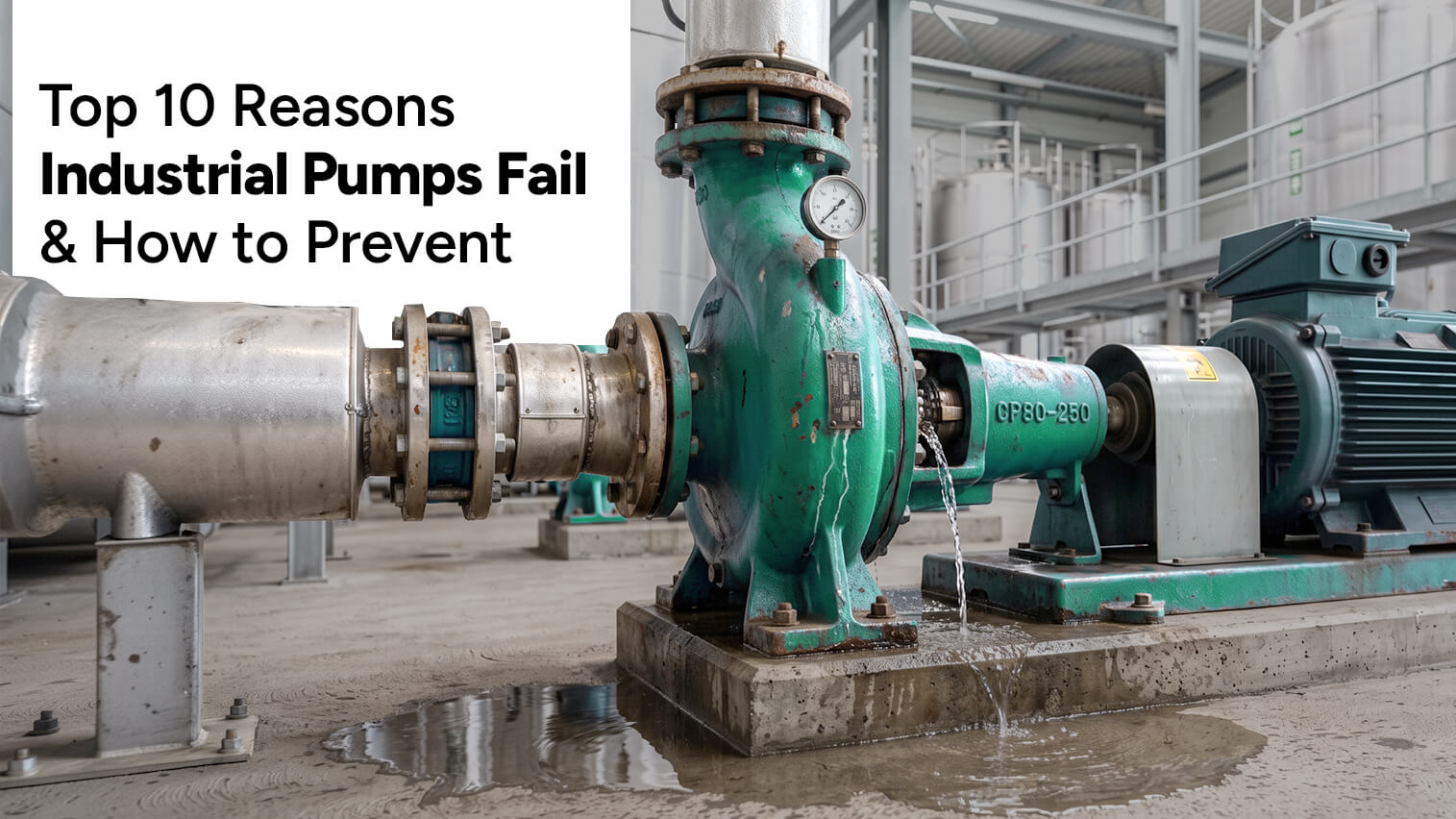
Industrial pumps are known to play a vital role in various industries. The fluid handling operations have to be reliable for each setting in an industry. Whether you are managing chemical processing or a municipal water facility, a pump failure becomes more than just a mechanical hiccup- it becomes a disruption to your entire process.
Even if you have the most robust equipment, it will require a proactive defense. Choosing the right industrial pump manufacturer and implementing proper maintenance protocols are essential first steps. To keep your facility prepared for generating maximum output, you need to identify the factors that compromise system integrity.
We bring you the top 10 reasons industrial pumps fail and what you can do to prevent them:
Hydraulic & Process Dynamics
Failures occurred due to the interaction between the pump’s internal structure and the fluid movement.
1. Cavitation
Cavitation occurs when the pressure at the pump inlet drops below the vapor pressure of the liquid and forms vapor bubbles. When these bubbles move into high-pressure zones, they implode with enough force to erode metal surfaces.
- How to prevent it: Ensure your system’s NPSHA (Net Positive Suction Head Available) consistently exceeds the required NPSHR, increase the suction piping diameter, and maintain clean intake filters to prevent significant pressure drops.
2. Operating Outside the (BEP)
Every pump has a Best Efficiency Point (BEP). Operating too far to the left or right of this point on the performance curve creates internal turbulence and massive mechanical stress on the shaft and bearings.
- How to Prevent: Monitor flow meters and pressure gauges religiously to stay within 80%-110% of the BEP. 10. Electrical Integrity
3. Thermal Overload
If the pump runs against a closed discharge valve, it’s called thermal overloading or deadheading. It turns the pump into a heater. Since the energy has nowhere to go, the liquid boils, potentially melting internal components within minutes.
- How to Prevent: Install a minimum flow bypass line. It will ensure that even when discharge valves are closed, a small amount of liquid continues to move, carrying heat away. Integrating thermal sensors to trigger an automatic shut-off before a thermal meltdown occurs.
Defects in the mechanical component
Failures related to the physical health of the rotating assembly and sealing surfaces.
4. Mechanical Seal Integrity
The mechanical seal is your first line of defense against leaks. One of the common causes of failure is dry running. If no liquid is used to cool and lubricate the seal faces, they overheat and crack almost instantly.
- How to Prevent: Implement interlocks and dry-run protection sensors to ensure the pump never operates without media and verify that your seal materials (e.g., Silicon Carbide vs. Carbon) are chemically compatible with the pH and temperature of your specific process.
5. Bearing Fatigue & Lubrication
Bearings are the most essential parts of a rotating assembly. When they fail, the resulting shaft play destroys seals and impellers. Most bearing issues start due to moisture contamination or poor lubrication practices.
- How to Prevent: Adopt a strict lubrication schedule based on operational hours. Upgrade to labyrinth seals to keep contaminants out of the bearing housing and use high-grade synthetic lubricants that provide good thermal stability.
6. Corrosion & Metallurgy
Aggressive chemicals require specific metallurgy. Incompatible materials lead to thinning of walls and a change in internal clearances that kill your pump’s efficiency and structure.
- How to Prevent: Match your equipment’s metallurgy to corrosion-resistance standards based on the specific chemistry of your media. Use specialized high-nickel alloys and protective coatings from reputed Industrial pump suppliers, which are designed for high-acid or corrosive slurry environments.
Allignment issues
Issues that arise during installation and alignment
7. Shaft Misalignment
If your motor and pump shafts are not perfectly aligned, the system creates loads. This puts constant and uneven pressure on bearings and seals, leading to premature fatigue and excessive heat buildup.
- How to Prevent: Laser alignment is mandatory for industrial standards. Always re-verify alignment after the pump is bolted to its final foundation, as structural shifts often occur during the final installation phase. Consult with your industrial pump manufacturer for specific alignment tolerances and best practices for your pump model.
8. Vibration
Vibration is a symptom of internal distress and is also called system fever – usually an unbalanced impeller, a bent shaft, or resonance in the piping. If ignored, vibration will eventually shake the mounting hardware apart and cause fatigue failure.
- How to Prevent: Use vibration monitoring sensors to establish a performance baseline. This allows you to catch deviations and schedule maintenance before a catastrophic failure occurs. Check for uneven mounting during every inspection to ensure the pump is perfectly seated on its base.
9. Clogging & Internal Fouling
Debris can choke an impeller, causing the shaft to bend. Even if the pump continues to run, it does so at a much higher cost in energy and with increased mechanical stress.
- How to Prevent: Utilize high-quality suction strainers and schedule regular inspections to clear any accumulated debris. For high-solid applications, consider Mackwell’s non-clog impeller designs, which are engineered to pass debris without sacrificing hydraulic efficiency.
Electrical Integrity Failures
Motor failures that can give you a definite or indefinite break
10. Electrical Integrity Failures
Power surges, phase imbalances, and motor overheating can end a pump’s life as surely as a broken shaft. These issues are often caused by poor ventilation or incorrect Variable Frequency Drive (VFD) settings.
- How to Prevent: Ensure all wiring meets the requirements, and use VFDs to allow for soft starts that will reduce the mechanical shock. Regularly check motor winding insulation to catch electrical decay before it leads to a total burnout. Working with a trusted industrial pump manufacturer can help you implement proper electrical protection systems and recommend the right motor specifications for your application.
Conclusion
Managing industrial pumps is an inevitable challenge. By understanding the prevention measures, you can ensure your facility is sustained and has a profitable uptime.
At Mackwell Pumps, we engineer pumps with precision that cater to your fluid handling issues. Partnering with experienced industrial pump manufacturers like Mackwell ensures you have the support needed to prevent these common failures.
FAQs
1. How can I tell if my pump is cavitating?
You will usually hear a distinct sound like pumping marbles. If you hear this along with fluctuating pressure, check your suction line immediately.
2. Is vibration always a sign of failure?
All pumps vibrate slightly, but excessive vibration-anything above the baseline established by your industrial pump suppliers-is a warning sign of misalignment or internal damage.
3. Why is the BEP so important?
Operating at the BEP ensures that the forces inside the pump are balanced. Moving away from it increases radial thrust, which is a leading cause of broken shafts and seal leaks.
Insights about
your industry
A Definitive Guide to Centrifugal Process Pumps