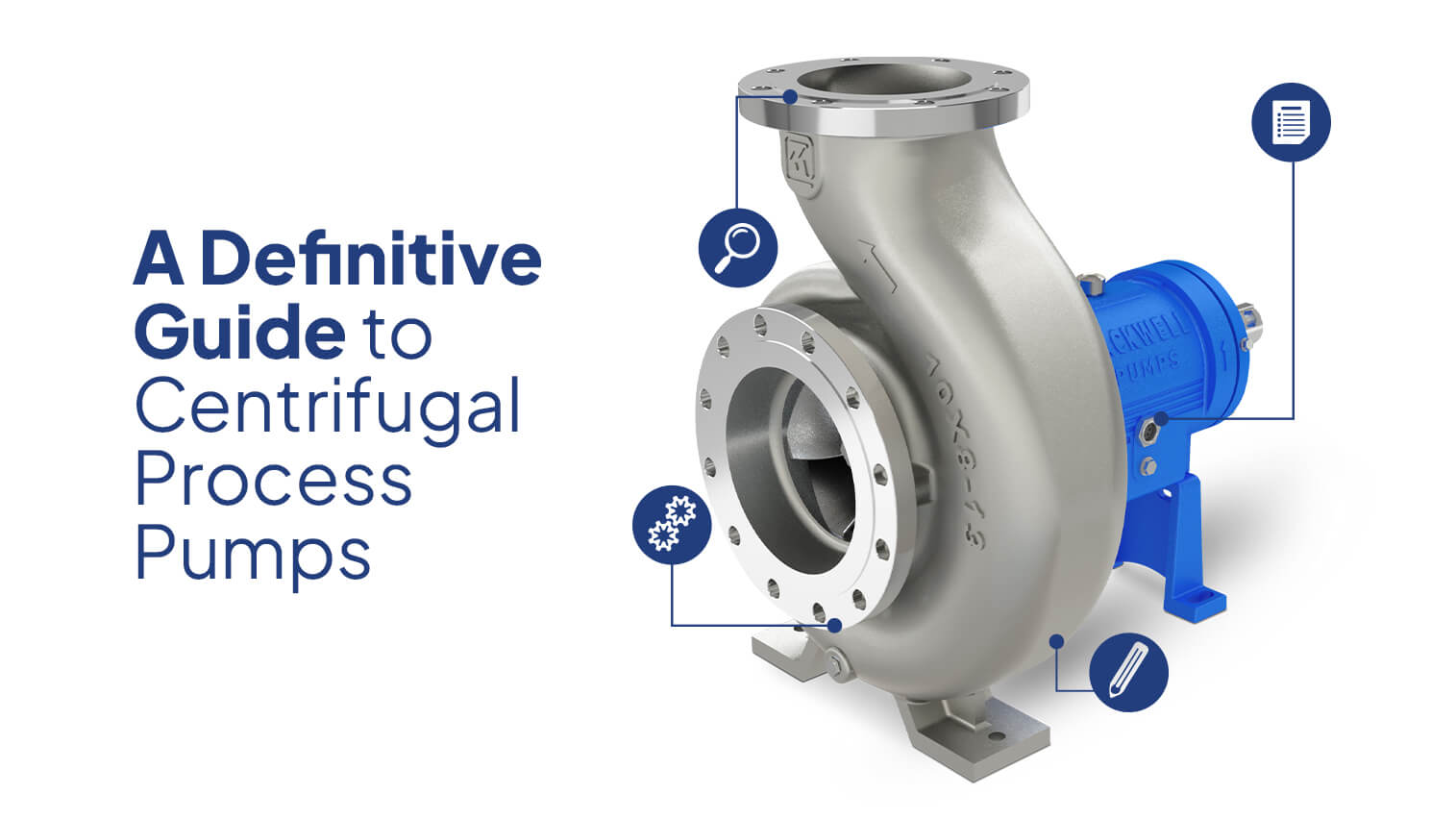


How to Choose the Right Pump for an Ethanol Distillery Plant
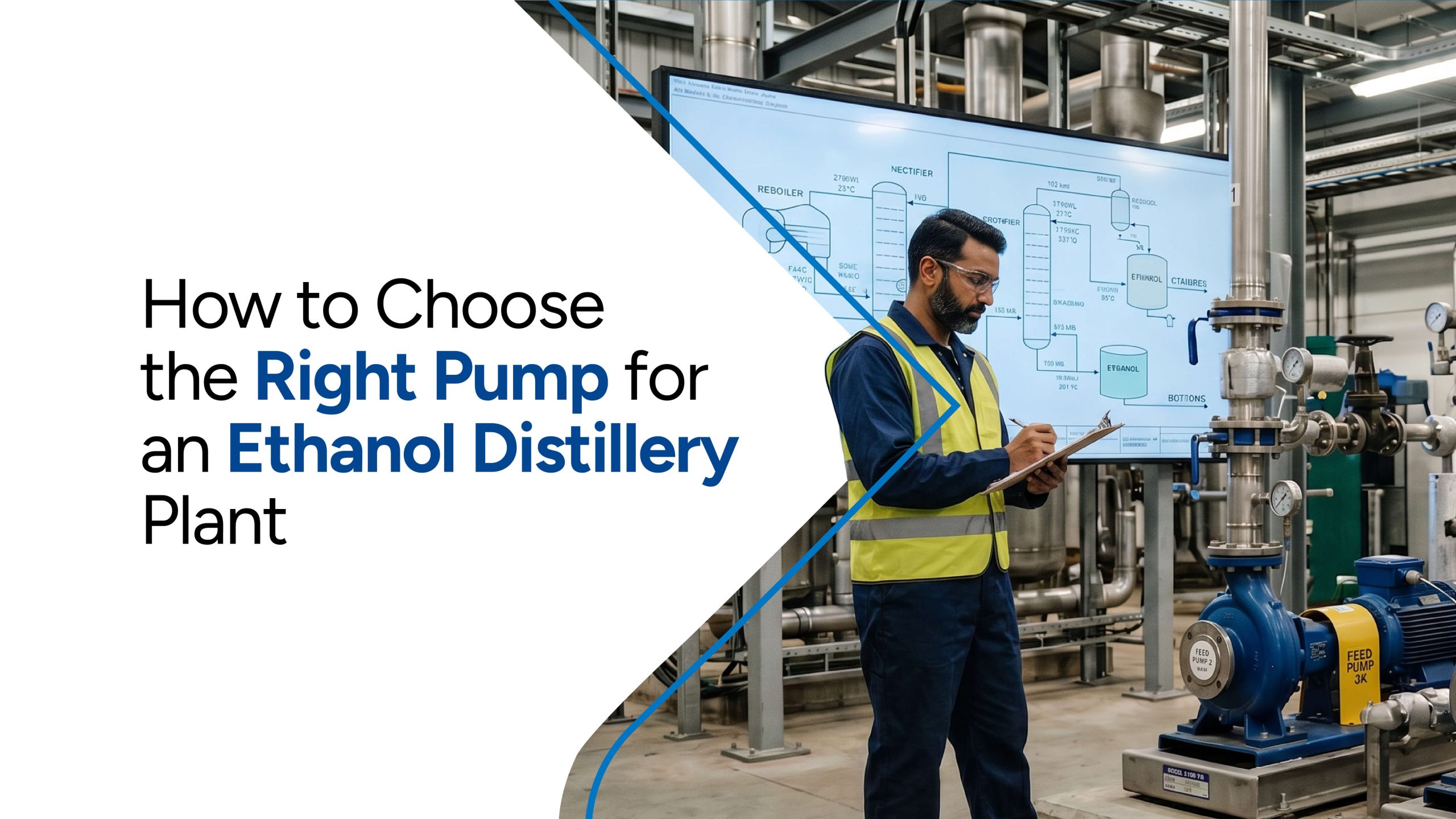
Selecting the right pump for an ethanol distillery plant requires balancing explosive fluids, abrasive grain slurries, and extreme thermal processing cycles. If your machinery cannot handle volatile ethanol vapours or rough corn mash mixtures, your facility faces costly unplanned shutdowns and severe safety hazards.
Here at Mackwell Pumps we engineer targeted fluid solutions to optimise your conversion rates, control operational risks and keep your production lines running without unexpected breakdowns.
Why Ethanol Distillation Demands Specialised Pumps
An ethanol plant is a fast-paced chemical processing environment. Moving fluids from the initial milling stage down to final storage involves shifting mechanical demands at every single turn.
- Explosion Hazards: High-proof ethanol gives off highly flammable vapour, and must be handled with spark-free, sparkproof equipment.
- Slurry Abrasion: The solid particles in the raw grain mash rapidly wear out the ordinary metal impellers.
- Corrosivity: Organic acids produced in fermentation corrode lower grade industrial metals.
Key Processing Stages and Their Pumping Needs
To maintain absolute safety and keep your yield high, you need to match your hardware to the specific material profiles of each production zone.
1. Mash Preparation and Liquefaction
The first slurry is ground grain with water and enzymes. This is a heavy, solid-laden mix, so you need an open-impeller system that is designed to move solids easily without clogging.
2. Fermentation Loops
During the fermentation the yeast changes the sugar into alcohol. This gives a very volatile, low-viscosity liquid that must be tightly sealed by the shaft to prevent vapour leaks.
3. Evaporation and Molecular Sieves
Separating pure ethanol from water requires intense thermal energy. The residual fluids and oils must be transferred under high vacuum and scorching temperatures.
The Mackwell Lineup: Built for Distillery Operations
We do not believe in a one-size-fits-all approach. We have designed three distinct pump families to handle the unique mechanical challenges found throughout your facility.
FLOWELL™ Centrifugal Pump: The Process Workhorse
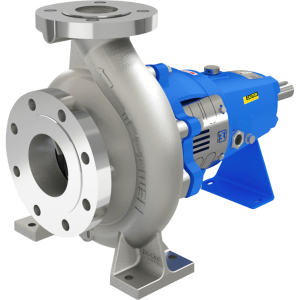
Our FLOWELL™ series moves your high volume, low viscosity liquid transfers cleanly.
- International Framework: Fully compliant with international ISO 2858 and EN 22858 standards
- Volumetric Capacity: Up to 1500 m³/h to keep large distillation lines running continuously
- Pressure Tolerance: Safe operation up to 1600 kPa (16 bar) system pressure
This series is perfect for transporting clean alcohol, water treatments and light chemical additives throughout your layout.
MACKPRO™ Centrifugal Pump: The Heavy-Duty Slurry Master
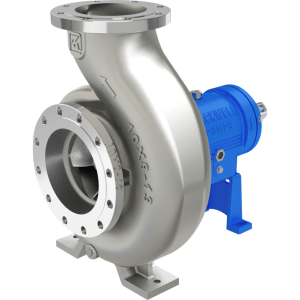
When you need to move rough grain mash or corrosive chemicals, our MACKPRO™ series steps up to the plate.
- Design Standard: Meets and exceeds rigorous ANSI/ASME B73.1 requirements.
- Open Impeller Engineering: Built with over 30 advanced hydraulics to process thick solids smoothly.
- Thermal Range: Handles extreme fluid temperatures from -50 °C to +260 °C.
Heavy duty open-impeller design prevents thick fluids from packing behind the shroud, reducing your monthly energy consumption.
THERMACK™ Hot Oil & Water Pump: The High-Heat Specialist
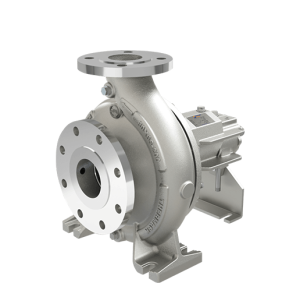
Your distillation columns rely on precise, non-stop heat transfer. Our THERMACK™ series keeps thermal fluids circulating perfectly without needing external cooling.
- Advanced Venting Technology: Uses natural convection to drop temperature rapidly from the casing to the bearing.
- Extreme heat limits: suitable for synthetic and mineral thermal oils up to +350 °C.
- High thermal stress: Continuous flow rate up to 754 m3/h under high thermal stress.
The design does not require complex external cooling loops, so you will have a simpler piping layout and less maintenance.
Comparing the Options for Your Plant
Choosing the correct machine depends heavily on where it sits in your operational flow. The table below outlines how our core models fit into a standard facility layout.
| Pump Series | Design Standard | Max Temperature | Best Application in Distillery |
| FLOWELL™ | ISO 2858 / EN 22858 | +200 °C | Clean alcohol transfer, blending, and utility water loops. |
| MACKPRO™ | ANSI/ASME B73.1 | +260 °C | Grain mash feeding, thin stillage, and corrosive chemical dosing. |
| THERMACK™ | ISO 7005 PN 16/20 | +350 °C | High-temperature thermal oil circulation for distillation columns. |
Actionable Tips for Sizing Your Equipment
Before you complete your next plant upgrade or layout of an installation, run through these essential engineering checks:
- Check Vapour Pressure: When pumping volatile ethanol, make sure your Net Positive Suction Head Available (NPSHA) is well above the needs of the pump to avoid cavitation.
- Metallurgy of the Match: Use high grade stainless steel or duplex alloys for the acidic fermentation lines to prevent premature erosion of the housing
- Choose the Correct Seals: For pumping high proof ethanol use double mechanical seals with buffer fluid to ensure no vapour escape.
Conclusion
Choosing the right pump for your Ethanol Distillery plant protects your team, reduces your energy costs and prevents unexpected down time during peak production periods. Keep your factory floor running with equipment designed for uptime.
Contact our engineering team today for a detailed technical brochure or custom quote for your facility.
FAQ’s
1) What type of pump is safest for handling pure ethanol?
The best way is to use an ANSI or ISO end-suction centrifugal pump with explosion proof motors and double mechanical seals for complete containment of volatile alcohol vapours.
2) How does the THERMACK™ pump handle high heat without external cooling?
It is provided with an internal venting arrangement that takes advantage of natural convection to remove heat from the mechanical seals and bearings without any need for a secondary cooling water supply.
3) Can the FLOWELL™ pump handle fluids with abrasive particles?
The FLOWELL™ series is designed for clean or slightly contaminated low-viscosity fluids. For fluids with a high concentration of grain solids or mash, our MACKPRO™ series is a much better fit.
4) Why do standard pumps suffer from cavitation in ethanol plants?
Ethanol has high vapour pressure. It boils at a lower temperature than water. If the pump is the wrong size or pressure suddenly drops the liquid flashes into vapour bubbles that collapse and damage the impeller.
Insights about
your industry
Role of Centrifugal Pumps in Sugar Industry