

Mud Pumps: Types, Uses & Applications (Complete Guide)
Mud is messy. Moving it? Even more challenging. If you have ever worked with slurry, drilling fluid, or thick waste, then you know this is not the kind of thing a normal pump can do.
Industries, therefore, depend on specialised equipment such as mud pumps. And if you’re searching for mud pump manufacturers in India, chances are you need something that won’t choke, clog, or fail halfway through the job.
What Is a Mud Pump (In Simple Terms)?
A mud pump is designed to move thick, heavy, and often abrasive fluids. We’re talking about:
- Slurry
- Drilling mud
- Waste liquids
- Semi-solid mixtures
Clean water pumps have no problem with water flowing in a uniform manner, but these systems have to deal with particles, debris, and unpredictable flow. And that changes everything in how they’re built.
How Mud Pumps Actually Work
Let’s picture a drilling setup. Mud is used to cool the drill bit and carry cuttings back to the surface. But that mud needs to keep moving constantly. That’s where the pump comes in.
Basic working:
- The pump pulls mud from the tank
- Pushes it through pipelines
- Sends it into the system under pressure
- The cycle repeats continuously
Now here is the challenge. Mud is not smooth. It creates friction, wear, and blockages.
So the pump needs to be:
- Strong
- Stable
- Resistant to damage
Types of Mud Pumps You Should Know
Different industries use different setups. Here are the main types.
1. Triplex Mud Pumps
Most common in drilling.
- Uses three pistons
- Provides steady pressure
- Ideal for mud pumps for drilling rigs
2. Duplex Mud Pumps
Older design, but still used.
- Two pistons
- Simpler structure
- Slightly less efficient
3. Centrifugal Mud Pumps
Used when flow matters more than pressure.
- Continuous fluid movement
- Less pulsation
- Suitable for industrial slurry
This is where centrifugal technology overlaps with mud handling.
4. Submersible Mud Pumps
Placed directly in the fluid.
- Used in mining and wastewater
- Handles heavy solids
Most mud pump suppliers in India will help you choose based on your application.
Where Are Mud Pumps Used?
You’ll find them across multiple industries.
Common applications:
- Oil and gas drilling
- Mining operations
- Construction sites
- Wastewater treatment
- Chemical processing
Especially in drilling, an oil and gas mud pump is critical. Without it, operations simply stop.
Real Example (So It Makes Sense)
Imagine a drilling rig. As drilling goes deeper, debris increases. If mud stops circulating:
- Drill overheats
- Debris builds up
- Operations fail
That’s why reliable mud pumps for drilling rigs are non-negotiable.
Where FLOWELL & MACKPRO Fit In
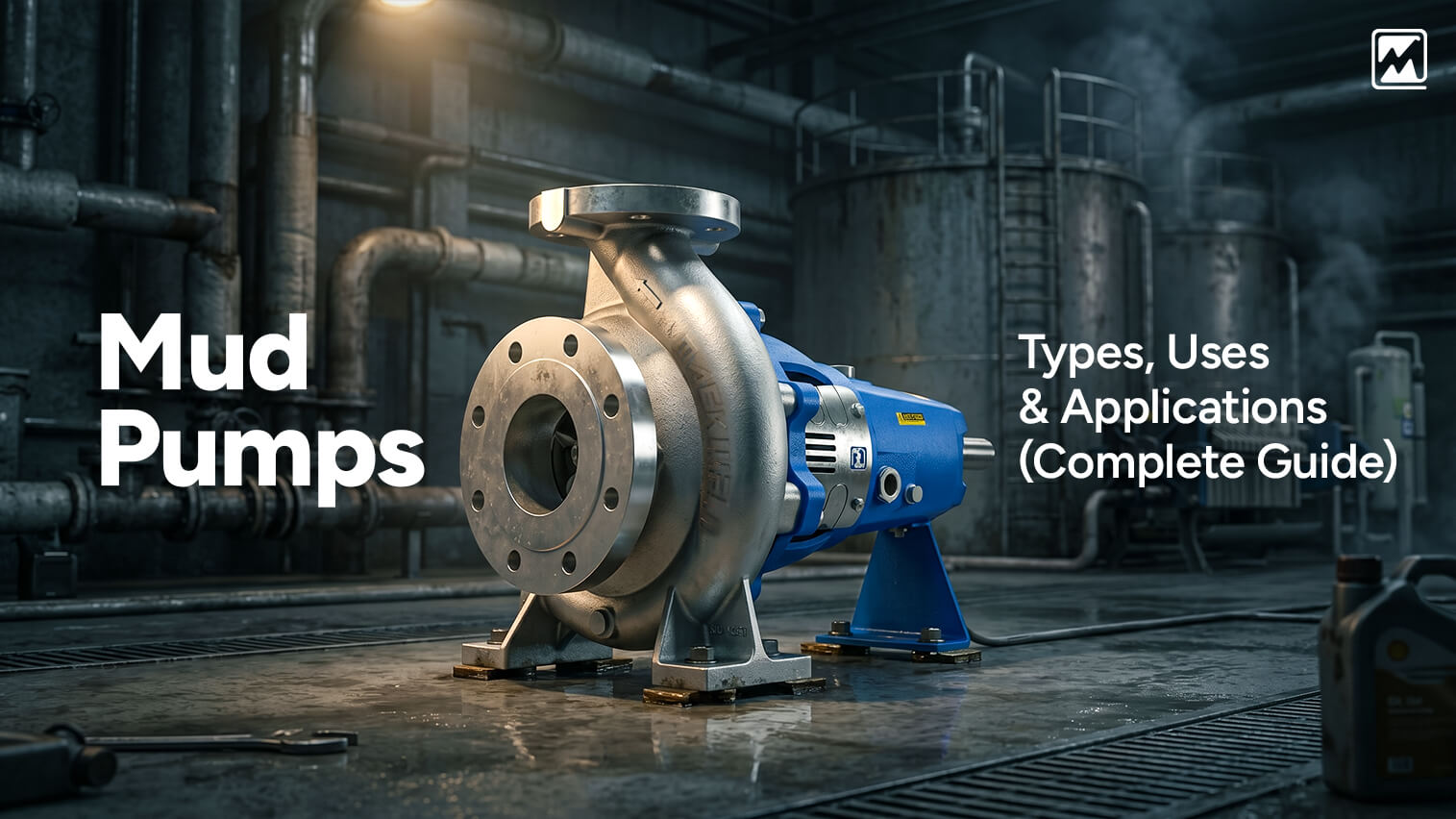
Now you might be wondering. These are centrifugal pumps. How do they relate to mud? Good question. While traditional mud pumps are piston-based, centrifugal pumps like FLOWELL and MACKPRO play a key role in supporting systems.
FLOWELL™ Centrifugal Pump
Best for controlled environments with lighter fluids.
- Handles up to 1500 m³/h flow
- Head up to 160 meters
- Works between -50°C and +200°C
- Designed for clean to slightly contaminated liquids
Used in:
- Pre-processing
- Fluid transfer systems
- Support circulation
MACKPRO™ Centrifugal Pump
Built for tougher conditions.
- Handles up to 1590 m³/h
- Head up to 223 meters
- Temperature up to 260°C
- Open impeller for handling solids
Used in:
- Chemical industries
- Refinery systems
- Harsh liquid handling
This is where it connects with industrial mud pump manufacturers requirements.
Why Choosing the Right Pump Matters
Here’s something people often ignore. Using the wrong pump doesn’t fail immediately. It fails slowly.
- Efficiency drops
- Maintenance increases
- Downtime becomes frequent
According to the U.S. Geological Survey, industrial water and fluid systems consume massive energy resources globally. Even small inefficiencies can turn expensive over time.
Key Features to Look for in a Mud Pump
Before you choose, check these:
- Ability to handle solids
- Pressure requirement
- Flow rate
- Material strength
- Maintenance ease
Reliable mud pump manufacturers in India will always match the pump to your actual need, not just sell what’s available.
Benefits of Using the Right Mud Pump
Let’s keep it real.
1. Smooth Operations
No interruptions in flow.
2. Better Efficiency
Less energy waste.
3. Lower Maintenance
Fewer breakdowns.
4. Longer Equipment Life
Less wear and tear.
5. Consistent Output
Stable performance across cycles.
How to Choose the Right Supplier
This matters more than the pump itself. When working with mud pump suppliers in India, look for:
- Industry experience
- Customisation options
- After-sales support
- Proven performance
Because in real conditions, support matters just as much as the product.
Explore Our Centrifugal Pump Range
If your system includes fluid handling beyond thick mud, our centrifugal range can support multiple operations. FLOWELL and MACKPRO are designed for real industrial environments, not just controlled setups.
Final Thoughts
Mud pumps are not just equipment. They are the backbone of operations in industries where fluid isn’t clean or easy to handle. And while piston pumps dominate drilling, centrifugal systems like FLOWELL and MACKPRO play a crucial supporting role.
If your system involves complex fluid movement, choosing the right combination matters. Because once the flow stops, everything stops.
FAQs
1. What is mud pump used for?
It is used to move thick fluids like slurry, drilling mud, and waste liquids.
2. What industries use mud pumps?
Oil & gas, mining, construction, and wastewater industries rely heavily on them.
3. Are centrifugal pumps used for mud?
Yes, they are used in support systems and for less dense slurry applications.
4. How do I choose the right mud pump?
Check flow rate, pressure, fluid type, and maintenance requirements before selecting.