

Industrial Pumps Used in Starch Manufacturing: A Complete Guide

Walk into any starch plant, spend an hour on the floor and you will see this in action; nothing stands still for long. Corn, tapioca or potato slurry is constantly moving between steeping tanks, mills, separators and dryers. Pumping systems play a critical role in maintaining continuous flow across these process stages. One pump failure during the separation stage can disrupt production, resulting in downtime and potential product losses.
For this reason, starch plants typically prioritise proven pumping solutions from experienced industrial pump manufacturers. They stick with established industrial pump manufacturers in India that already have a track record in food-grade and slurry handling, and they’re picky about which industrial pump suppliers in India they actually deal with.
Why Starch Manufacturing Depends So Heavily on Pumps
Starch extraction is predominantly a wet process involving multiple stages of fluid and slurry handling. The raw material comes in as a solid, but for most of its time inside the plant it’s slurry, milk or syrup: thick, sometimes abrasive, and always in motion through pipes, screens, centrifuges and evaporators. None of that matters because the pumping system must maintain reliable flow while handling suspended solids without excessive shear or clogging. Several factors are therefore critical when selecting pumps for starch processing.
- Handling solids without chewing through the impeller in a few weeks
- Supporting continuous operation during demanding processing periods
- Staying steady on pressure even when the slurry thickens between stages
- Allowing straightforward maintenance and cleaning to support applicable hygiene requirements
Miss on any of these and you’ll be dealing with cavitation, a seal that won’t hold, or flow that just can’t keep pace with what the mill is putting out.
The Starch Manufacturing Process, Stage by Stage
Whether it’s maize, cassava or potato going in, most plants follow roughly the same path, and there’s a pump waiting at nearly every step of it.
1. Steeping
The grain or roots are steeped in water, often with sulphur dioxide added, to soften the raw material before milling. You want low-shear pumps here, anything too aggressive and you risk damaging the kernel before it’s even been processed.
2. Wet Milling / Grinding
After steeping, the softened material is ground to form a coarse slurry. This is roughly where things get harder on the pump. Solids content picks up, and abrasion resistance therefore becomes an important pump-selection consideration.
3. Starch–Gluten / Fibre Separation
Centrifuges and hydrocyclones are used at this stage to separate starch from protein and fibre. If the pump feeding them can’t maintain a steady, pulsation-free flow, separation efficiency drops, which can ultimately influence yield.
4. Washing and Dewatering
The starch milk goes through several washes to strip out leftover protein. This stage involves significant water flow at this point, so flow rate and head matter more here than almost anywhere else in the line.
5. Drying and Packing
By the end, the slurry has been dewatered and is on its way to being dried into powder. So, the increasing solids content can place greater demands on the pumping system.
Types of Pumps Used in Starch Plants
| Centrifugal Pump | High flow, low-to-medium viscosity liquids | Steep water transfer, wash water circulation |
| Slurry / Heavy-Duty Centrifugal | Abrasive slurries with suspended solids | Separation feed, dewatering lines |
| Positive Displacement Pump | High viscosity, consistent metered flow | Concentrated starch paste, syrup transfer |
| Self-Priming Pump | Locations with suction lift or intermittent air | Sump and drain-back applications |
Centrifugal pumps are widely used across starch-processing applications because they can efficiently handle high flow rates. The main reason for this is their efficiency in moving large volumes. However, when the slurry becomes thick or abrasive in the separation and dewatering process, a standard centrifugal design starts to run into problems. We’ve seen plants that installed the same pump everywhere and paid for it in impeller replacements every few months. It’s an easy mistake to make and an expensive one to keep repeating.
Where Mackwell Pumps Fits In
Mackwell’s centrifugal pump range is designed to address demanding fluid-handling requirements across industrial process applications. Two models in particular see steady use across starch and food-processing lines.
FLOWELL Centrifugal Pump
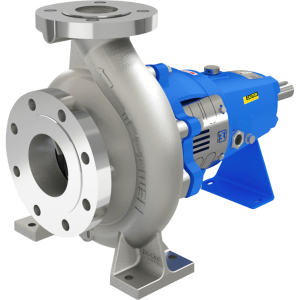
Built to ISO 2858 and EN 22858 standards. FLOWELL offers flow rates up to 1,500 m³/h, heads up to 160 metres, and an operating temperature range of -50°C to +200°C. This operating range allows the pump to serve a range of process-fluid applications which is exactly why it works well for both the cooler steeping tanks and the warmer wash circuits without needing two separate pump models.
MACKPRO Centrifugal Pump
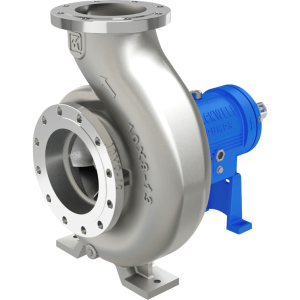
Built to ANSI/ASME B73.1 standards for demanding process applications. Flow up to 1,590 m³/hour, head up to 223 metres, temperatures up to 260°C. MACKPRO is suited to applications involving higher-solids starch streams and demanding pressure or flow conditions.
Final Thoughts
Starch processing can place significant demands on pumping equipment. Continuous flow requirements, changing viscosity and abrasive solids can all contribute to pump wear and performance challenges. All through the same line, day after day. Getting pump selection right at each stage isn’t some small detail hidden away in a spec sheet; it’s often what separates a plant that runs quietly through the whole season from one that’s constantly patching up breakdowns.
If you are upgrading an existing line or addressing recurring pump failures, it’s worth talking to an experienced industrial pump manufacturer with application-specific expertise. At Mackwell Pumps, we’re one of the industrial pump manufacturers in India. Our engineers work with process teams to match pump curves to actual operating conditions before finalising the pumping solution. It takes longer upfront, but it means fewer breakdowns nobody saw coming.
FAQs
1. Which type of pump is most commonly used in starch manufacturing?
Mostly centrifugal pumps, as they can efficiently handle many of the high-flow requirements found across starch-processing lines. Heavy-duty or slurry-rated centrifugal pumps may be preferred for applications involving higher solids content, such as separation and dewatering.
2. Why does starch slurry cause faster pump wear than water?
Because it isn’t just liquid. There’s suspended fibre, grit and protein in there, and all of that grinds away at impellers and casings far quicker than clean water ever would. Abrasion-resistant materials aren’t optional once you factor this in.
3. What temperature range should a starch plant pump handle?
Varies by stage. Steeping and wash circuits stay cool, but drying and concentration can push past 250–260°C, so most plants end up needing more than one pump type across the full line.
Insights about
your industry