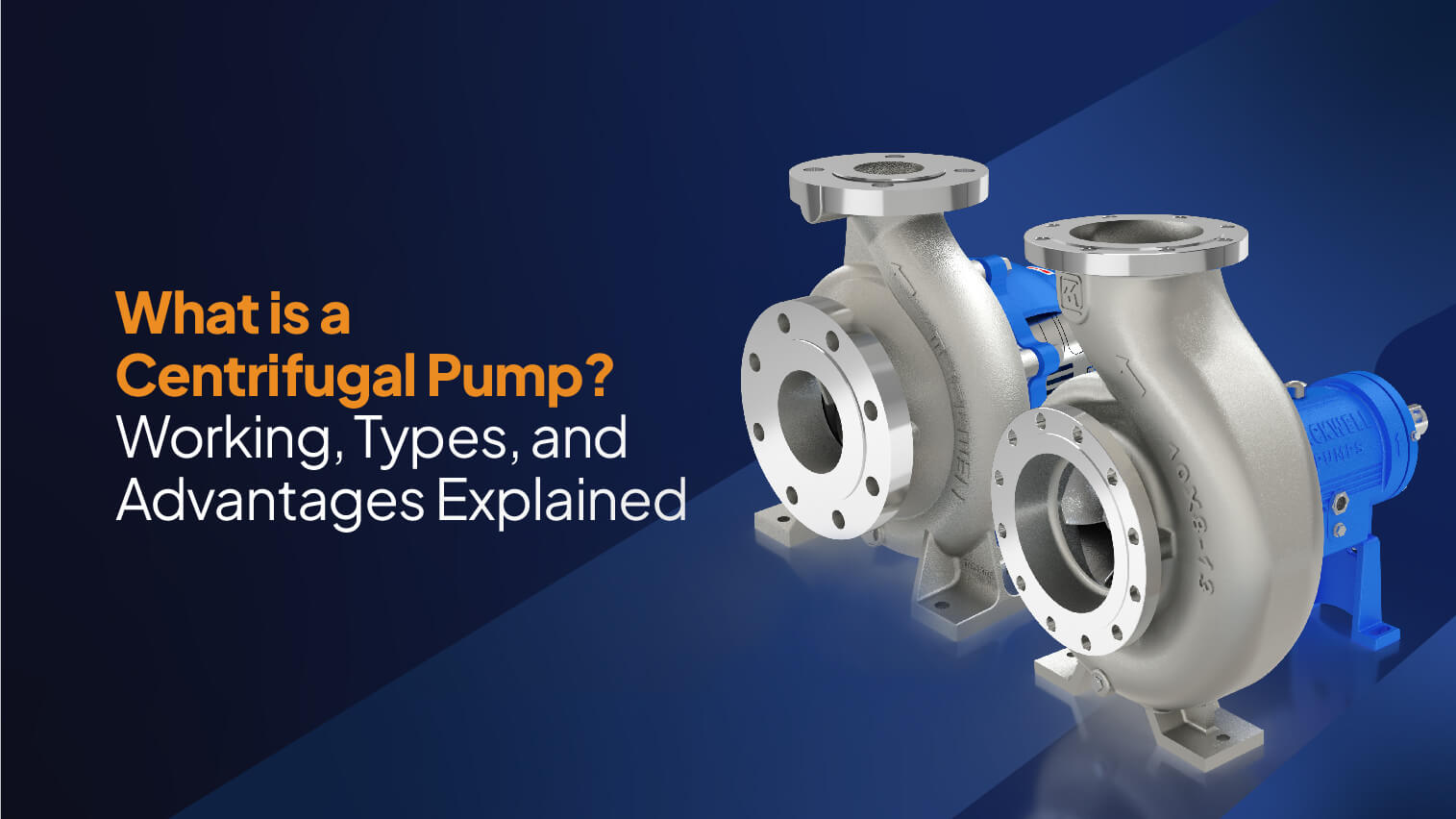


Centrifugal vs Positive Displacement Pumps for Starch Applications
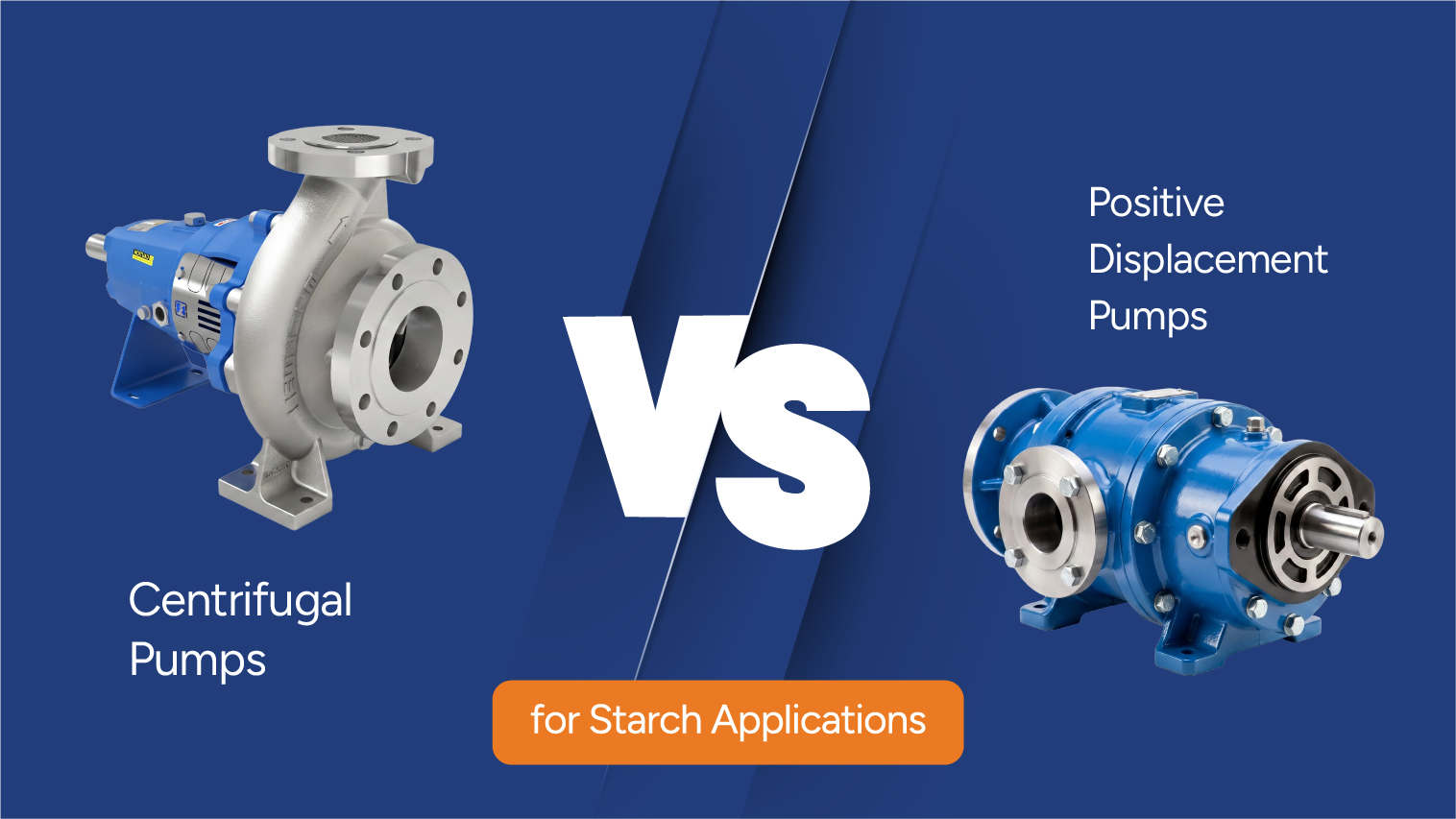
Ask five plant engineers whether a starch line requires a centrifugal pump or a positive displacement pump, and the answer will depend largely on the specific process stage and operating conditions. Centrifugal pumps are well suited to transferring steep water and wash water at relatively high flow rates.
Positive displacement pumps can maintain a steady flow when handling higher-viscosity starch streams and changing discharge pressures. Getting this choice wrong is one of the more common reasons plants end up calling centrifugal pump manufacturers in India mid-season, once a pump that looks fine on paper starts struggling with real slurry. It’s also why serious buyers vet centrifugal pump suppliers in India carefully before a line ever gets designed.
The Core Difference
A centrifugal pump uses a rotating impeller to impart velocity to the fluid, converting that energy into pressure and flow through the pump casing. The fact that it is easy to operate and inexpensive to maintain is probably the reason why it has already dominated such a large portion of the market. According to ResearchAndMarkets, centrifugal pumps were projected to account for approximately 66.94% of the global pumps market in 2023.
A positive displacement pump traps a defined volume of fluid and transfers it through the system using mechanisms such as gears, lobes or screws, depending upon the design.
This trapped-volume operating principle allows a positive displacement pump to maintain relatively consistent flow across changing pressure conditions, making it well suited to higher-viscosity fluids.
Positive displacement, on the other hand, continues to expand at a more consistent rate, approximately 5% compound annual growth rate (CAGR), primarily on the back of precision-driven industries such as food processing and pharmaceuticals.
Where Each One Wins in a Starch Plant
- Steeping and wash water transfer: centrifugal, particularly for high-flow applications and efficient operation.
- Wet-milling slurry transfer: centrifugal, typically with a heavy-duty or slurry-duty configuration selected for the solids content and operating conditions.
- Concentrated starch paste transfer: positive displacement, particularly where higher viscosity and consistent flow are key requirements.
- Metered dosing of additives or chemicals: positive displacement, where controlled and repeatable flow is required.
Quick Comparison
| Feature | Centrifugal Pump | Positive Displacement Pump |
|---|---|---|
| Best for viscosity | Low to medium | Medium to very high |
| Flow under changing pressure | Drops as pressure rises | Stays constant |
| Typical starch stage | Steeping, washing, milling feed | Paste transfer, dosing |
| Running cost | Lower | Higher, more moving parts |
| Maintenance | Simple, fewer wear parts | More frequent, seals and valves wear |
For high-volume, relatively low-viscosity duties across much of a starch-processing line, centrifugal pumps often offer advantages in efficiency and simplicity. Where PD earns its place for specific duties involving higher-viscosity fluids, controlled flow or precise dosing, and a plant that ignores this split usually ends up over-pumping in one section and under-delivering in another.
Where Mackwell Pumps Fits In
We build our centrifugal range specifically for the volume-heavy stages where slurry still carries solids.
Two models are particularly suited to several starch-processing applications:
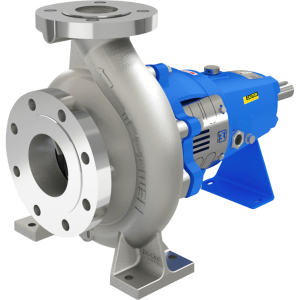
FLOWELL Centrifugal Pump
- Built to ISO 2858 and EN 22858 standards
- Flow up to 1,500 m³/hour, head up to 160 metres
- Working temperature range from -50°C to 200°C
- Suitable for steeping and wash-water circuitswhere its flow, head and temperature capabilities meet the process requirements.
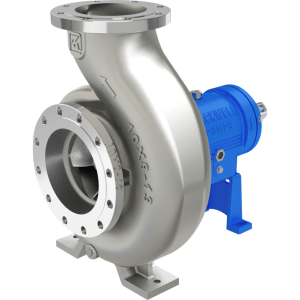
MACKPRO Centrifugal Pump
- Built to ANSI/ASME B73.1 standards for demanding process applications.
- Flow up to 1,590 m³/hour, head up to 223 metres
- Temperatures up to 260°C
- Suited to applications involving higher-solids slurry or more demanding pressure and flow conditions.
Both pumps can be configured with abrasion-resistant wetted components, which can be important when handling starch slurries containing suspended fibre and other abrasive solids. Suspended fibre and abrasive particles can accelerate wear on standard impellers compared with clean-water service.
Common Mistakes Plants Make
- Installing a single centrifugal pump across every stage, including high-viscosity paste transfer where it may not provide the required flow performance.
- Using positive displacement pumps for high-volume, low-viscosity water transfer where their metering capability is not required, potentially increasing system cost.
- Selecting materials without considering abrasion resistance, potentially increasing impeller wear and maintenance frequency.
- Failing to account for the different temperature and fluid conditions across process stages.
Choosing the Right Supplier
Selecting between centrifugal and positive displacement should not be based solely on a product specification sheet. A good supplier walks through your actual slurry composition, viscosity range, and duty cycle before recommending any pump. That’s the gap a lot of centrifugal pump suppliers in India don’t bother closing, they sell what’s in stock rather than what fits the line.
At Mackwell Pumps, we’re among the centrifugal pump manufacturers in India to have an application-focused approach to pump selection and configuration. Our engineers work with your process data before a unit ships, which helps ensure that the selected pump is aligned with the actual operating conditions before commissioning.
Conclusion
Centrifugal and positive displacement pumps aren’t competitors; they’re tools for different jobs within the same starch line. Selecting the appropriate pump type for each duty supports reliable and efficient plant operation.
An unsuitable pump selection can result in inadequate flow, excessive wear or inefficient operation at the affected process stage. If you are planning a new line or reviewing an old one, it’s worth mapping each stage against the pump type before ordering anything.
FAQs
1. Is a centrifugal pump or positive displacement pump better for starch slurry?
The choice depends on the process stage. Centrifugal pumps are generally well suited to high-flow, lower-viscosity slurry transfer, while positive displacement pumps are better suited to higher-viscosity fluids, controlled flow and certain higher-pressure duties.
2. Why do positive displacement pumps cost more to maintain?
Depending on the design, positive displacement pumps may include seals, valves and close-tolerance components that require regular inspection and maintenance.
3. Can one pump type handle an entire starch line?
Rarely. Different process stages may use centrifugal pumps for high-volume transfer and positive displacement pumps where higher viscosity, controlled flow or precise dosing requires them.
4. Which Mackwell pump suits thicker starch paste?
The MACKPRO centrifugal pump, built for higher pressure and temperatures up to 260°C, is usually the better fit as slurry thickens toward the drying stage.